
Note: My recent blogs (like this one) are a bit longer, meant to sit back and read, enjoy, and ponder. My attempt to fight back against fast-food information and, moreover, forge a better relationship with you :)
Congratulations, you had the surgery! You diagnosed the SIBO and treated it, reversed your iron deficiency, and finally dealt with that lingering thing (insert whatever you battled here). So why in the world, you wonder, do you still feel like a sack of potatoes?
Maybe the bloating still comes and goes, or a single intense exersise class leaves you unraveled for days (yes, plural). Maybe your kids can ramp your stress from 0 to 100 over a spilled cup of milk (rather than just saying "no use crying over spilled milk"—seriously, it's a very wise phrase). So maybe, just maybe, you've started to wonder what else is wrong with you. What other root cause is hiding or which diagnosis you've missed.
Maybe you go on social media to check and, oh wow, that packs a doozie. Now you have a laundry list of all. the. things. associated with endo and may potentially be affecting you too! Insert silent scream*
If any of this sounds familiar....believe it or not, it does to me too.
Years ago, after my endo symptoms went into remission, after I'd written Heal Endo and had the two kids I wasn't sure I'd ever have, I emailed myself a note titled Why Do I Still Feel Like I'm Falling Off the Rails? [yes, I email myself—that’s another store about how a scatterbrain deals with life]
In it I described sneezing attacks that lasted 25 to 30 sneezes, new eczema on my elbow, bloating that came and went, and an exhaustion so deep that after I put the kids down for bedtime I'd flop on the couch like a fish drowning on land. Meanwhile my brain would be racing a million miles per second, as anxiety-riddled mothers' brains can. I wondered “How could I possibly carry my two children through the woods in the dark if marauders broke into our home right now?” Or, “What if a hurricane hit and left us without power or water??” I was certain, at this point, that no one would survive because I wasn’t capable of helping.
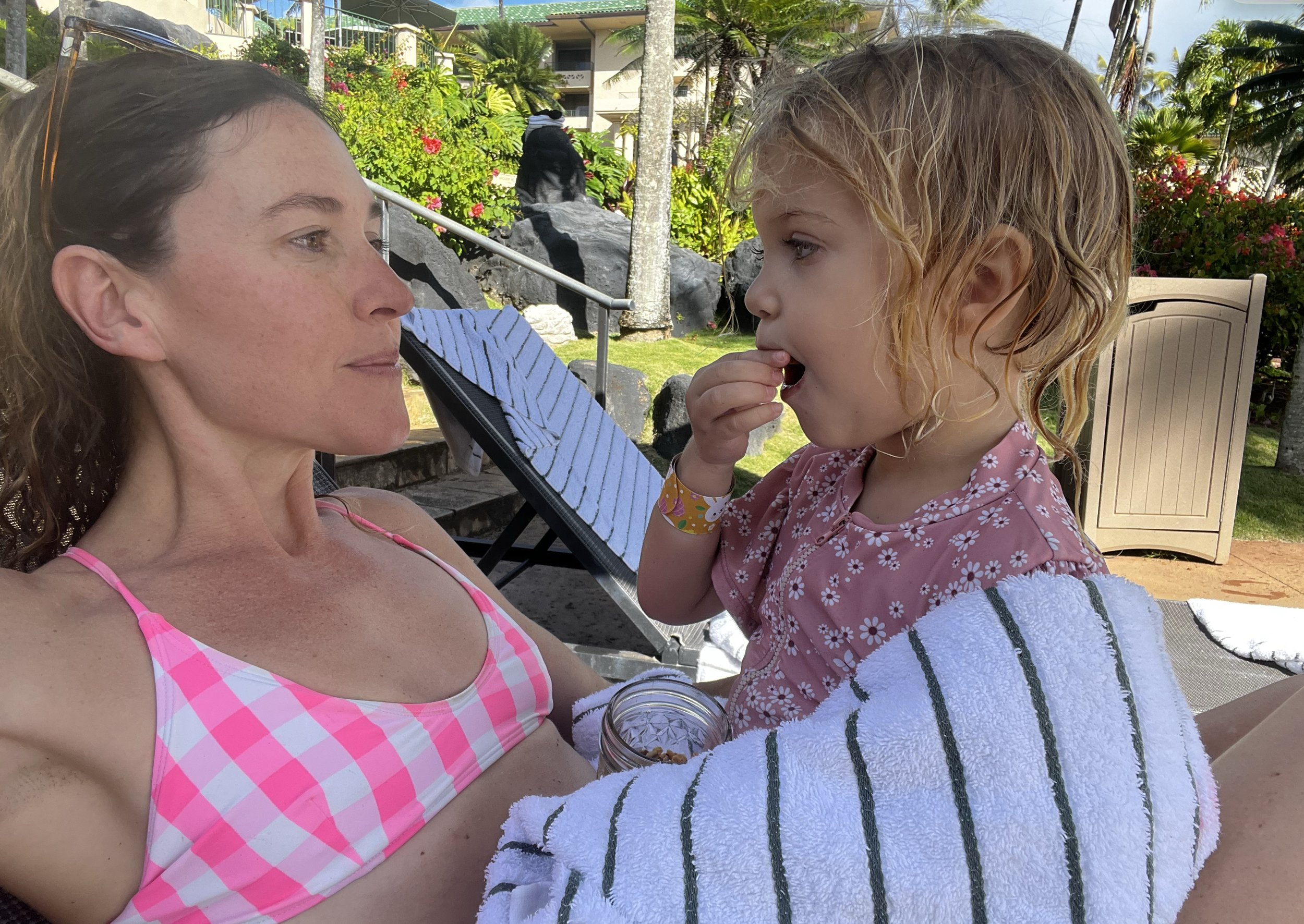
Parenting is a blessing (for those of us that want to)! But it also puts an ENORMOUS amount of extra stress and energy needs on top of us. If we’re not training for this, it can be part of the sink.
Yet, underneath the doomsday scenarios I entertained nightly was a very real question: If I could barely make it through the normal tasks of life, how would I survive if sh*t hit the proverbial fan? Or, what if I want to do more than now—run a marathon or go backpacking. How could my health ever afford it?
It took some more research to answer this question, but the answer was clear, and it didn’t end up being “find another root cause.”
The funny thing was, I didn’t even think to document this part of the journey until I received so much feedback from my last blog about how I live in remission. So many women wondered: HOW THE HECK DID YOU GET THERE?? It felt, to them, like going from “treating endo” to “living without supplements and being able to do everything without collapse” was a big jump. They wanted to know where I got my jumping shoes.
This, here, is I realize, is the missing part of the map.
Diagnose, Treat, Repeat?
For a long time, I looked at my health through one lens: What else is wrong with me? And honestly, investigating had served me pretty darn well. It's how I found the root causes behind my endo symptoms and got better in the first place. So when I still didn't feel great, I did what had worked before. Find the next problem. Treat it. Still not right? Find another. Diagnose, treat, repeat.
I see this cycle in my inbox nearly every day. Women who had the surgery, did the pelvic floor PT, overhauled their diet, and are now wondering if it's mold, parasites, histamine, or something they haven't heard of yet. Their endo symptoms are better, yet they feel stuck in what I've come to call the mystery of feeling worse after endo.
What it never once occurred to me to ask was whether I was doing anything to get stronger. I had become remarkably skilled at identifying what depleted me without ever discovering what strengthens me. This pivot changed my life, now focusing on how to strenghten my systems rather than throw another protocol at them. And it worked because… that’s what we need to do when we have a collapsed ceiling.
The Problem: A Collapsed Ceiling
Bodies are amazingly adaptable, for better or worse. When they're under siege, they'll keep us alive at all costs. In fact, they'll stop spending precious resources on any system we don't seem to need in the meantime! It's why people on bed rest lose muscle so quickly. Use it or lose it is extremely accurate here.
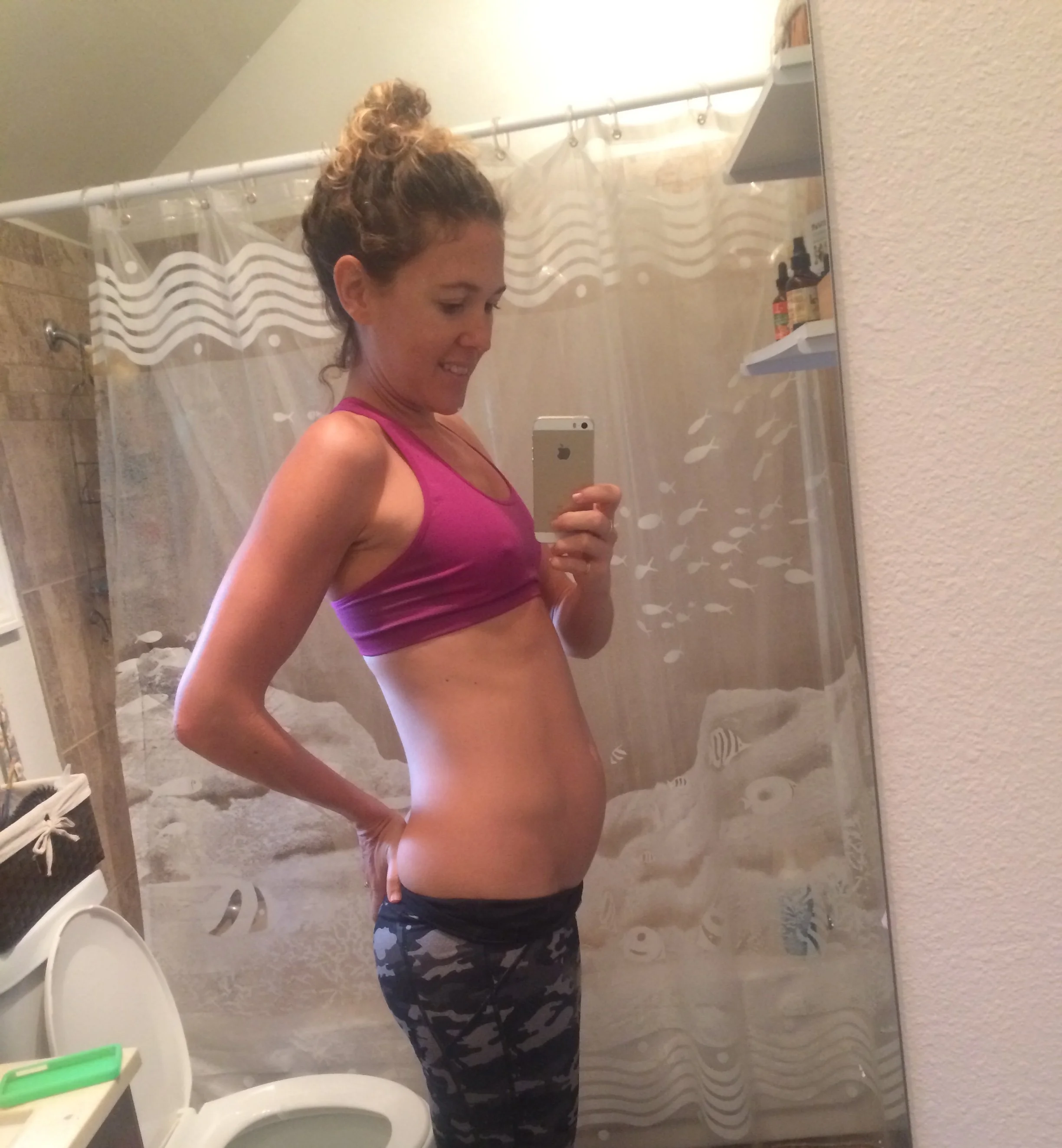
Me with active, awful endo: could not keep muscle on at all, bloated pot-belly all the time (me taking a belly-selfie here), inflammation changing my nervous system as we speak!
Now imagine years, sometimes decades, of endo before anyone figures out what's going on. Chronic pain, worsening digestion, poor sleep, less and less movement, and inflammation thrumming through your system the whole time. Inflammation can change the way the brain processes information and perceives threats (feel on high alert often, anyone?). It can change how our cells respond to insulin, how our muscles are built and maintained, and how our bodies process food.
Then add the protection. Many of us cut out foods, stress, exercise, travel, and anything else that might set off a flare. That's can be a smart move at first! But when a body is never asked to do those things, it gets worse at doing them. Avoid carbs long enough and your body can get worse at handling them. Avoid stress long enough and everything starts to feel stressful. Avoid a boatload of foods, your microbiome can shift so they’re harder to reintroduce.
Either way, through endo or self protection (or, like me, both), the ceiling of what we can handle collapses. And we end up living hunched over in a space far smaller than the life we want.
It can feel... icky. Rather than feeling strong and capable after our endo treatments we were so excited to have (the surgery, the treatments), we feel low in confidence, a little lost, and weak. And the symptoms are very real! There's the food and digestive ceiling: the shrinking list of "safe" foods, until we're down to twenty and terrified of the rest. There's the nervous system ceiling: living as if we're being hunted for sport, when we're just checking emails or getting feedback from a colleague. There's the metabolic ceiling: a body that can't seem to handle carbs, crashes between meals, and edges toward insulin resistance. And there's the fitness ceiling: weak muscles, low endurance, weights that somehow never feel lighter, and workouts we survive rather than build on.
And of course there is the mental and emotional ceiling: the slow but steady undermining of our identity that leaves us more connected to our chronic illness than we should be; the loss of self.
Looking back, so many of the things I thought were new problems were simply systems that had gotten…weak. The pelvic heaviness I was convinced was pelvic congestion syndrome? A seriously weak pelvic floor. The histamine reactions that had me reading up on MCAS? A nervous system I had trained (by me, ahem) to be afraid of food.
I didn’t need more functional medicine tests… I needed to rebuild what had been lost.
Challenge Over Protection
Now, this is not a blog saying ignore your lingering symptoms and don't seek a diagnosis when you need one. That would be absurd of me to assume anything about your own body and case. Some limitations aren't collapsed, they're cemented (celiac disease isn't going to rehab away), and sometimes there really is another issue to treat! For example, you may have had a successful surgery for lesion removal, but the surgery itself drove the development of scar tissue—so you now need to deal with that.
But this approach here is different than finding another diagnosis for those who are moving beyond.
You can think of this as another option; a perspective swap only you can make, with curiosity in mind. I want you to wonder: Am I still sick, sick in new ways, or am I simply de-conditioned? If it's the latter, seeking more things "wrong with you" simply won't help. Instead, you need to change gears and dutifully resurrect your collapsed ceiling with a structured approach that widens what you're capable of.
AKA: You need to challenge yourself to expand, rehab, and improve function.

We need to rebuild our bodies to be able to handle life and any hurricanes (literal or proverbial) it throws our way! This was the hurricane we had in September.
I think of it like the plywood we nailed over our windows here on Kauaʻi when a hurricane was coming a few months ago. Plywood is essential for the storm, it’s protective—just like surgery, treatment, healing diets, and real rest. But live behind it too long and the house goes dark and stale, and the world outside starts to feel more dangerous simply because you haven't been out in it. At some point, the boards have to come down.
What that looks like depends on which ceiling has collapsed (and yes, it can be multiple).
If your digestive system is feeling rocked and unable to tolerate many foods, it may need a low-and-slow approach, meaning you reintroduce foods starting with very small amounts so your microbiome has a chance to catch up. If you haven't eaten starches for a long time because you've been afraid of carbs, then suddenly eat a boatload, you might react simply because your starch-degrading bacteria (like Ruminococcus bromii, a key player in breaking down resistant starch) have dwindled.
The bloating you swore was recurring SIBO? Maybe it eases when you stop forcing reintroductions and instead, ever so slowly, reintroduce more variety of starches.
If your muscular system and endurance are lagging big time, you might need to take a few steps back before you even think about a squat challenge, and instead work to align and strengthen your pelvic floor, lumbar, and deep core. You might need some physical therapy to improve how your muscles function, long before you worry about how toned they look. I learned this one the hard way, trying to jump back into running five miles like I had a decade earlier, only to get injured or exhausted every few weeks.
If your nervous system treats every email like a code red emergency, or when your kids spill some milk, it may need gentle, deliberate practice with small stressors, plus real recovery afterward, so it can learn that most of life isn't a bear chase. Truly, you are not being hunted for sport every day, although it can take "nervous system rehab" in order to get there. Maybe you just need to strenghten your nervous system rather than treating it like it’s fragile.
And if your metabolism crashes between meals, it may need help rebuilding the flexibility to burn both carbs and fat. Or, perhaps you have some insulin resistance, which needs certain inputs to reverse.
That's the pivot. Not “What else is wrong with me?” but “What have I stopped asking my body to do, and how do I slowly rebuild it?”
Yes, the Ceiling Can Rise… But we with endo often need a unique approach
The truth is, we can rebuild collapsed ceilings, it may just take a unique approach for those with endo.
When I open Instagram these days I get a barrage of algorithms cherry-picked accounts telling me how I can be stronger and healthier if I just follow these steps: eat tons of more protein, train way harder, fuel constantly, add cold plunges, sprints, sauna, heavy lifting, fasting, and every other hormetic stressor currently in fashion.
While these tools have been shown in some studies to help some people—please know there is no study showing how all of these stressors at once affect anyone, needless to say someone recovering from chronic illness. If there were such a study, I imagine it would show poor response.
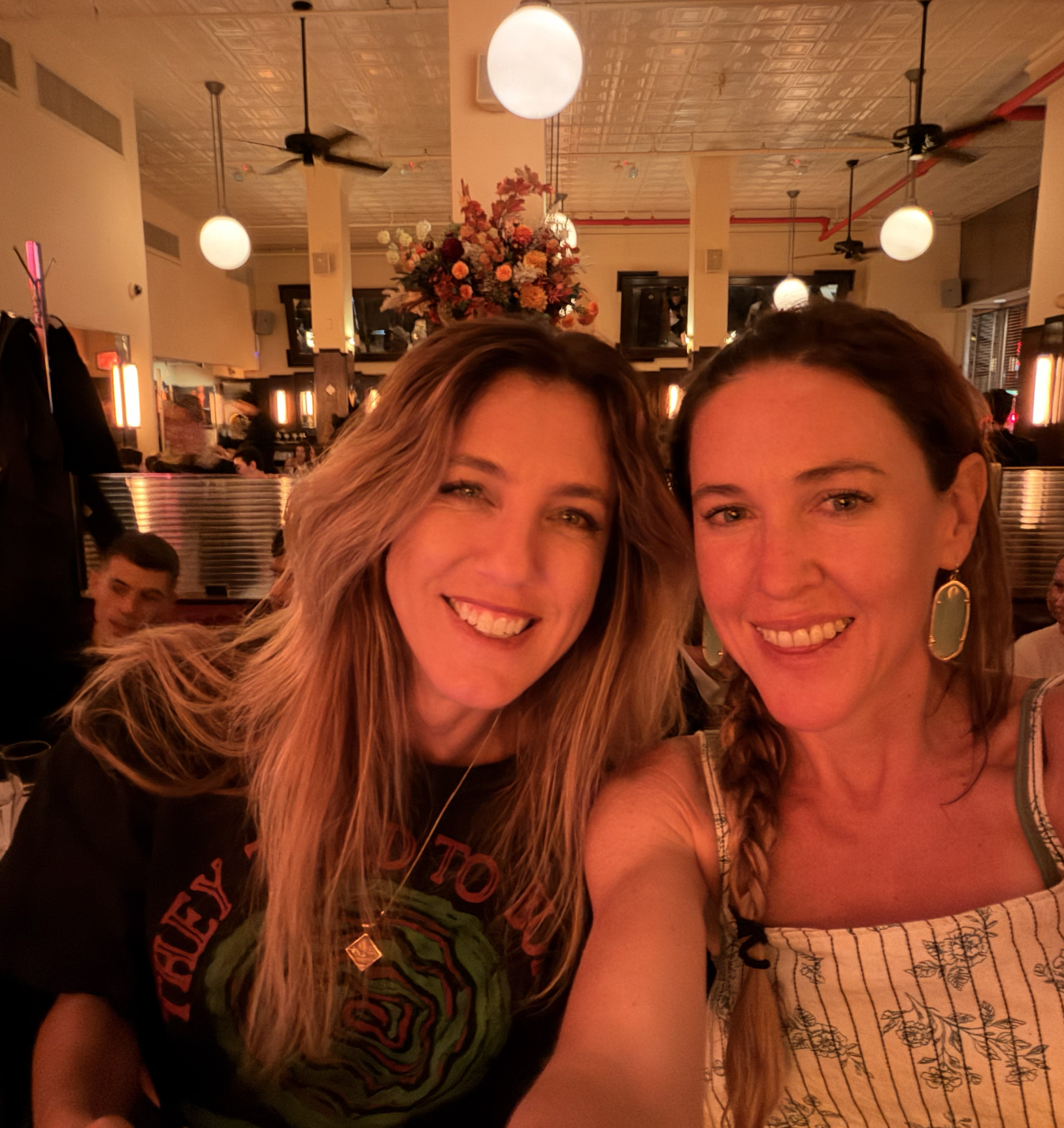
Me and a (very energetic) bestie travelling to NYC a few weeks ago. Totally able to keep up without collapse! Can keep muscle on, increasing indurance, and 1000% a better parent. #Winning.
Consider an average woman with endometriosis, she may be dealing with chronic pain, years of inflammation overload, poor sleep, awful periods, iron deficiency, inadequate nutrient intake, digestive issues, surgeries, abnormal hormonal shifts, and the stress of never knowing when she's going to be in so much pain she won’t be able to work. She may already have spent years restricting foods in an effort to feel better, and she may already be exercising through exhaustion because she thinks that's part of the process. Telling her to eat less and push harder to make “gains” may completely miss what is actually making it hard to impossible for her to feel stronger and better.
I suggest that, before we push harder on the building to see what it can take, we need to re-enforce the foundational structure so it can support the ceiling. It’s why I would never tell someone recovering from endo to suck it up, or they just need more grit—we need a more intelligent approach than this; something our bodies can handle and that will offer us TRACTION instead of more collapse.
Do you relate? Help is Coming
My first book, Heal Endo, was like the medic on the scene: what endo is, what drives it, and how to treat it. That work still matters immensely. But now I want to be the coach who helps you get back up and back in the game. Because I recently went through it, it’s where my current interest and passion lies.
So, for a while, my focus will be raising each collapsed ceiling, one at a time. We will talk physiology:
The nervous system: how to meet stress without collapsing, and why avoiding all stress can make everything feel more stressful.
Food and digestion: how to find the courage, and the realistic baby steps, to bring foods back when you're scared of so many.
Metabolism: building the flexibility to burn both carbs and fat without crashing between meals.
Strength and endurance: getting back in shape after an absurdly long hiatus, without getting hurt every few weeks.
But we'll also talk psychology and philosophy.
Because getting stronger isn't only for your body, it’s also for your mind! We'll explore what it means to identify with being well rather than sick (hello, placebo), how to find meaning in it all, and why the middle way beats the extremes that so often rule the health channels. We'll talk about how being stronger doesn't mean being perfect, how to move past fear, and why cleaning your room matters more than you'd think. We'll dip into re-enchantment, the lost and lovely art of pottering, and conquering the sneaky addictions (yes, even to our own health problems). And finally, we'll look at what life in remission actually looks like.
Whether you want to dance until 2am without worrying about your sleep score, eat gelato in Italy without a second thought about the dairy, or simply keep up with the marathon that is parenting, this series is for you.
It isn't sensational, and it can be seriously slow. Some of us will raise our ceilings higher than others. But I truly believe getting stronger is possible, even with endo.
Here's my hand. Let's take the plywood down.
Wait, before you go!
Have you experienced how rebuilding was an important missing step for you too? I want to hear from you! Send me a message at katie at healendo.com. Looking forward to hearing about your own journey to rebuilding.