Beyond the Echo Chamber: Finding a Solution-Oriented Support Group for Endometriosis
For many of us women, the moment we receive an endometriosis diagnosis is a bittersweet crossroads. On one hand, there is the relief of finally having a name for the chronic pain or other symptoms that have disrupted our lives. On the other hand, there is the daunting reality of managing a complex, often misunderstood disease.
As I mentioned in my best-selling book, Heal Endo: An Anti-Inflammatory Approach To Healing From Endometriosis, I sobbed uncontrollably for an hour over this diagnosis. At the age of 24, I literally was hoping it was something like cancer instead of endometriosis. Not because cancer is better (believe me, my dad recently died from cancer, it's awful), but because I knew there were treatments for it. In my preliminary understanding of endometriosis (which was mostly doom and gloom from limited online blogs at the time), I thought I was in for chronic pain for the. rest. of. my life.
Luckily, nowadays there are so many more resources available than there were 15 years ago! It's so much easier to, for example, read my book and understand what the disease is, how it behaves, and how to better address it. No, it doesn’t have to be forever.
Also, there are soooooo many cool groups that help us patients navigate this challenging (to say the least) illness. In the digital age, we also find we don't have to suffer alone. We can now join a support group for endometriosis. And this is exactly what this article is about.
However ... however, I'm not here to say all support groups are good. While the intent is to find encouragement, not all are created equal. Some become pretty dark "echo chambers"—spaces where members primarily lament their symptoms and the lack of a cure. While venting is a natural part of the human experience, staying in that space can hinder your progress. I have heard from many women over the years who had to leave groups because, believe it or not, there was no support or encouragement when these women started to feel better! Instead, they were pushed out or even berated (in certain cases) for creating false hope, lying (they said no one would ever feel better), or making others feel bad.
Sigh.
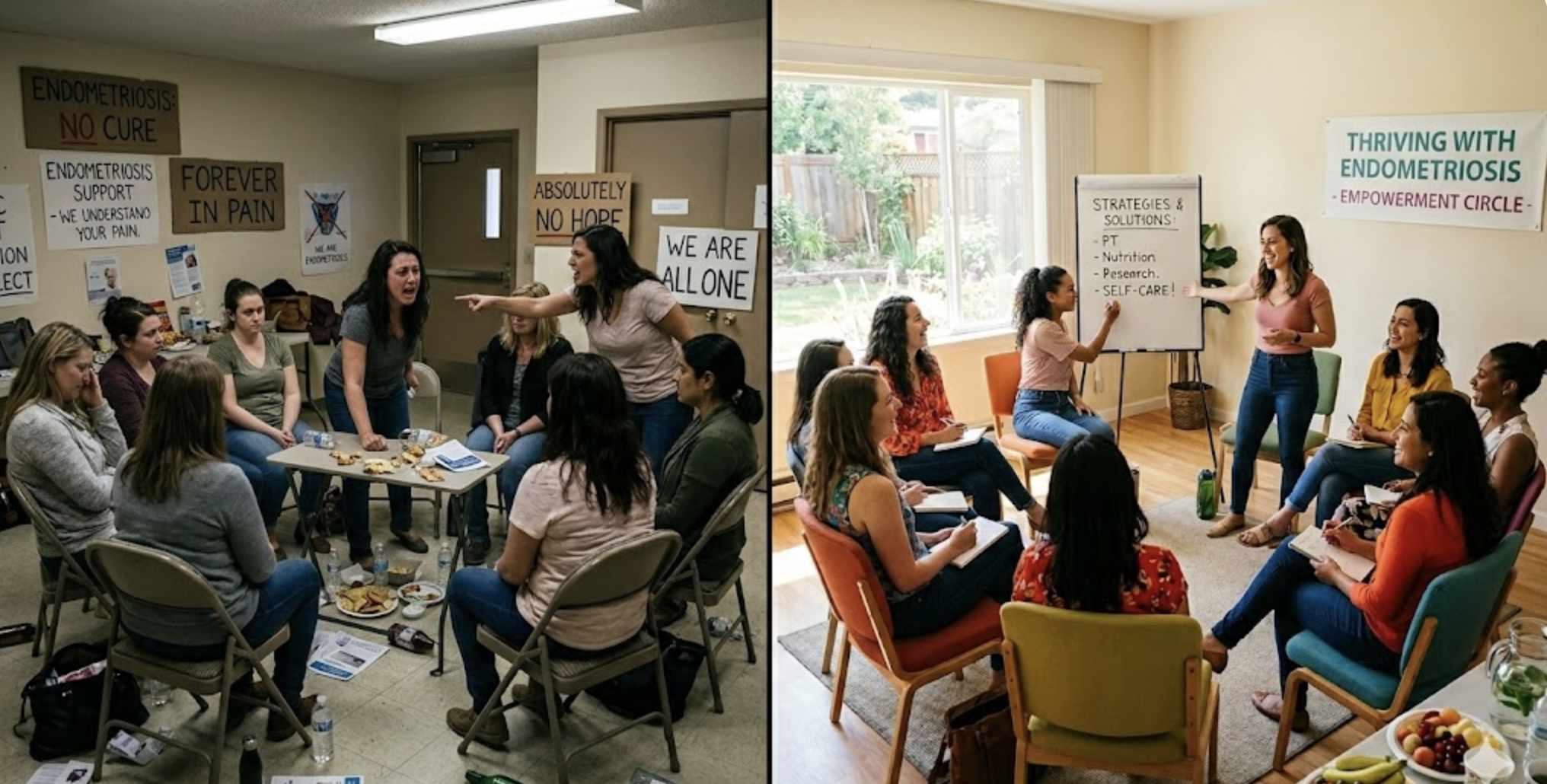
Two types of support groups. Which one you participate in my affect your trajectory more than you know!
So I'm here to say, if you are living with endometriosis, you deserve a community that prioritizes knowledge, education, and proactive coping strategies! This guide will help you explore how to find a community that honors your unique story while pushing you toward a better quality of life.
Why Early Diagnosis and Proactive Support Matter
As you probably know, the journey to an early diagnosis is notoriously difficult, often taking an average of seven to ten years. During this time, many women feel gaslit by the medical system (understandably so), leading them to trust online information over clinical advice. This is helpful to a certain degree, as long as the support is positive and hopeful, rather than negative and dark. Seriously, if there are tw types of support groups (negative or supportive) the one you participate in my affect your trajectory more than you know!
In fact, when you are finally diagnosed, the support you receive in those first few months can make a massive difference in your long-term health! A solution-oriented group doesn't just talk about the pain and suffering (as we've all been there); they can help educate you on:
Navigating the healthcare system, getting insurance to pay for things like iron, hormone, and thyroid testing, or pelvic floor physio, and the best surgeons in the area.
Understanding the impact of different treatment options on different bodies (honestly, we're all unique in what will make us feel better. To this day, I'm still in awe of what works for some and not at all for others.
Integrating and applying diet and lifestyle coping strategies that actually work (like info on my very free blog)
The Difference Between "Venting" and "Solving"
It is important to distinguish between a group that provides support and one that fosters despair. Because, on the outside, it may honestly be a little hard to tell from the get-go. Especially when you yourself need to have one big vent about alllllll the doctors or situations that led to you having a 10-year-out diagnosis. Here are some sleuthing tools to use.
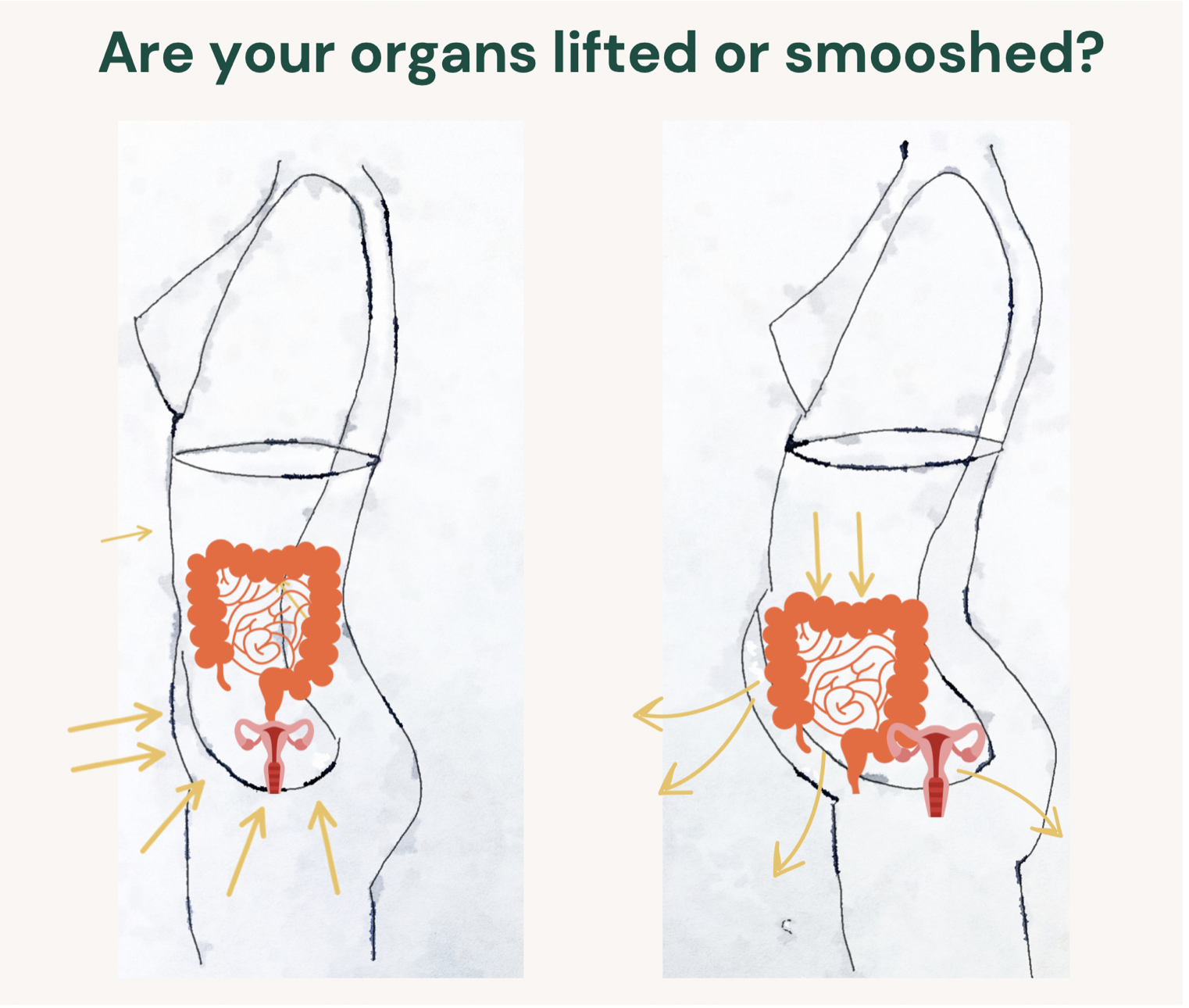
Core dysfunction is a big issue many of us with endo belly face, and something surgery won’t fix. Just one example of many way surgery is a great tool in the toolbelt, but not alwasy the “holy grail” fix it we seek.
The "Lamenting" Group: These groups are often loading posts about how "nothing works" or "life is over." It could be post after post about true but dark stories of symptoms ignored, patients mistreated, and endo getting worse. While the pain is real--and all of these stories too--the constant focus on the negative can subconsciously train your body and mind to stay in a state of high stress. Worse, it can train your brain to believe nothing can ever get better! Example: I have a smart 4-year-old. Yet, if I told her over and over that she is dumb, she would eventually believe it. Adults are no different. If we think over and over, we will never get better; well, we may literally never get better. Mind strongholds are real!
The "Solution-Oriented" Group: These members acknowledge the condition, the stories, and the suffering, but focus on what can be found to improve it. They discuss research, share stories of what helped, and inspire one another to resume their lives despite the challenges. They share books, share laughter, share information on nutrition, blood sugar, pelvic floor pt, and the myriad of treatment options that can help! I personally heard about Low Dose Naltrexone from a support group, and this little drug worked like a miracle for me. THIS is solution-oriented support.
A Note on Being Wary of "Gold Standards"
While searching for a support group for endometriosis, you may encounter popular resources like Nancy’s Nook or others that focus exclusively on surgery. These are pages that many people find useful for finding specialized surgeons. However, it is vital to maintain a critical eye. Some of these groups can be incredibly rigid, occasionally suggesting that excision surgery is a definitive cure or the only path.
In reality, endometriosis is a multi-systemic disease. While expert surgery is a cornerstone of treatment for some of us (indeed some of us may not truly get better without one!), claiming it is a total "cure" can lead to heartbreak if symptoms return ... which let's be honest, is not uncommon. A truly helpful group will ensure you understand that a hysterectomy is not a cure for endo, and that managing the condition often requires a multidisciplinary approach, including pelvic floor therapy, nutrition, and nervous system support -- everything I talk about in my book.
Remember, endometriosis is many things! It's also more than lesions. And while lesion removal may be necessary, putting all your "feel better" eggs in one basket can lead to future disappointment if, for example, you're also dealing with SIBO, mineral imbalance issues, nervous system dysregulation, iron deficiency, pelvic floor issues, core dysfunction, and more. Yes, many factors alongside endo that may be dramatically contributing to your symptoms, that cannot be addressed by surgery.
The Best Support Groups for Endometriosis (Solution-Focused)
If you are looking to join a community that will provide you with the knowledge to thrive, here are some of the most reputable organizations and groups that focus on education and empowerment.
1. The Endometriosis Coalition (The Endo Co)
This group is honored for its focus on the mental health aspect of living with endometriosis. They facilitate virtual support groups led by licensed mental health professionals. Instead of just sharing stories of pain, they teach coping strategies like mindfulness and distress tolerance.
Best for: Those looking for a balance of emotional validation and psychological tools.
2. Endometriosis Foundation of America (EndoFound)
Founded by Dr. Tamer Seckin and Padma Lakshmi, this organization is a powerhouse of research and education. Their page is a goldmine of information on treatment options and surgical advancements. They focus on early diagnosisby visiting schools to educate young women about their health. Dr. Dan Martin is the Scientific Director who wrote the foreword in my book, and his level of expertise is mind-blowing (he was the first to show me research that endometriosis is more likely to regress than progress)
Best for: Reliable medical knowledge and advocacy.
3. QENDO (Australia & New Zealand)
QENDO is world-renowned for its "ManageEndo" programs. They provide a unique mentor program where you can be matched with a peer who has "been there" and can help you navigate your diagnosis. Their focus is always on how to live a full life and work toward better outcomes.
Best for: One-on-one encouragement and practical management apps.
4. Endometriosis UK
This organization runs a network of local and online support groups that follow a strict code of conduct to ensure the environment remains helpful and safe. They often host guest speakers—from dietitians to pain specialists—to help members learn about the latest in endo care.
Best for: Finding a local community with a structured, helpful focus.
DO YOU HAVE A FAVORITE SUPPORT GROUP??? Please email me and I can add to my list :)
Groups to be Aware of (Misinformation or Problem-Focused)
I won't offer any specifics of groups to be aware of here. This is not about cancel culture; it's about you learning what to avoid.
1) Support pages focused solely on problems: Be aware of the groups that post dark memes all the time, or talk forever (and ever) about how awful endometriosis is and how there's no cure. PSA: There's also no cure for cancer, but cancer patients declare, "I'm beating cancer!" to feel empowered and focused on a positive direction. If your group isn't aiming for the same, leave.
2) Support pages with totally off recommendations: I can't tell you how many support groups I've seen with sufferers claiming water diets helped (omg please no), intense parasite cleanses, or heavy detoxes. While I'm not negating the need for certain interventions for certain people (like, if you have a parasite like I did when I got back from Senegal, you should address it), the main themes in these group seems to be the body is "dirty," and we need to "clean it." And you do that by somewhat brutal means, such as not eating, crazy cleanses, stressful detoxes, and the like. Please remember, having endo doesn't mean you're dirty and toxic :( More often, it means things are off kilter, and you need to find balance once again. So if you see toxic health support groups, simply remove yourself.
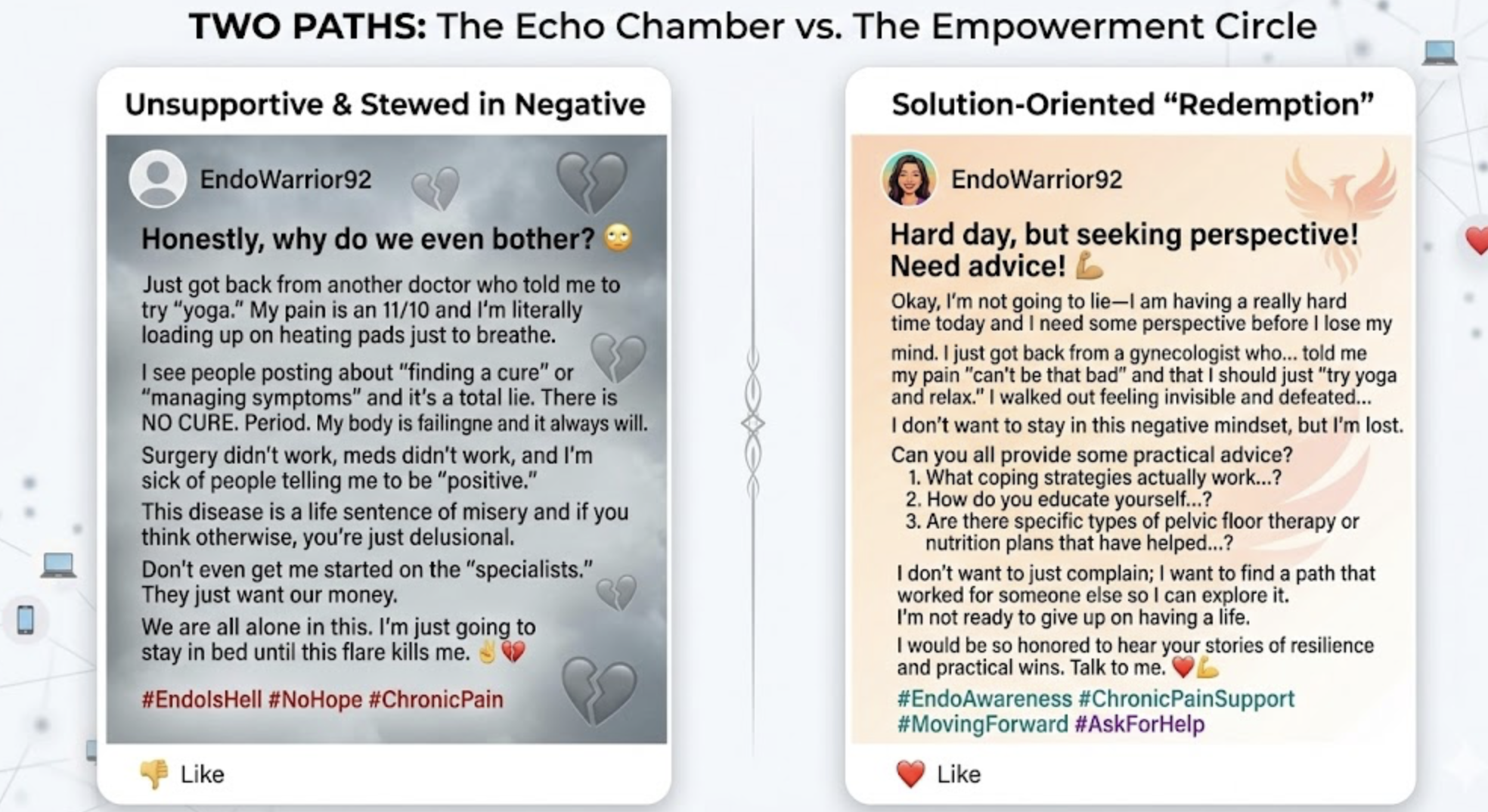
This is the difference between what you may see in the two different support groups. See how solution focused isn’t about toxic positivity, but it IS about reclaiming wellness.
Coping Strategies: Moving from "Diagnosed" to "Empowered"
When you are living with endometriosis, your daily coping strategies are just as important as your surgical or hormonal treatment. This is especially where constructive support groups shine, often discussing:
Pelvic Floor Physical Therapy: Many women find that much of their pain is muscular. Groups that discuss "the internal work" are focused on solutions.
Anti-Inflammatory Nutrition: While not a cure, many have found that dietary changes worked to reduce the overall inflammatory load on the body. Nutrition can help heal in so many ways!
Pacing and Energy Management: Learning how to resume activities without triggering a flare-up is a skill that veteran members can teach newcomers. In fact, I have a lovely blog about how pacing can change your entire life.
How to Get Involved and Protect Your Peace
If you are ready to join a new community, follow these steps to ensure it’s the right fit for you:
Lurk First: Yes, be a weirdo and lurk ;) Before you talk or share your email, take some time to read the recent posts. Is the tone inspired and helpful, or is it a "venting" session that never ends?
Ask for Resources: A good sign of a healthy group is when members provide links to peer-reviewed research rather than just anecdotes.
Check the Rules: Reputable support groups have clear rules against medical misinformation and bullying.
Trust Your Gut: If a group makes you feel more anxious about your health than before you joined, it’s okay to leave. Your mental well-being is paramount!
Don’t contribute to the chaos! If you feel a need to join a pile on about certain ‘bad info’ post, or counteract someone in a negative/aggressive way, please refrain. Although this is more and more common in internet culture, it doesn’t contribute to “being a good person” syndrome nor does it help settle your nervous system. Feel free to ask questions or disagree politely, or simply move on.
Final Thoughts
Living with endometriosis is an undeniably hard journey, but you do not have to walk it in the dark. By choosing a support group for endometriosis that values education over lamentation, you shift the power back to yourself.
You are not just a patient; you are a researcher of your own body. Surround yourself with people who respect that, and you will find that even with a chronic condition, a vibrant, fulfilling life is possible.